
The Moon: Your Most Faithful Sky Companion ചന്ദ്രൻ: ആകാശത്തിലെ ഏറ്റവും വിശ്വസ്ത സഹചാരി
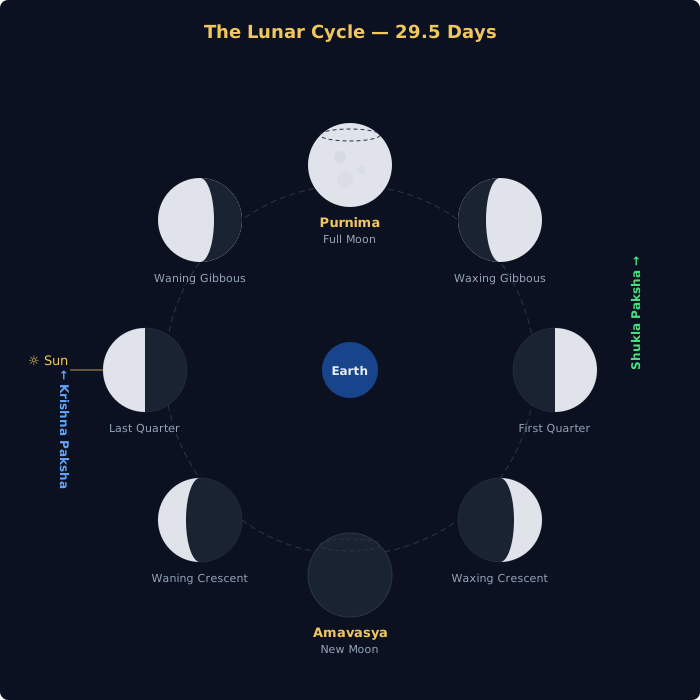
The Moon is the easiest object in the sky to observe and the most rewarding to watch over time. It changes shape every single night - and those shapes are not random. They follow a precise cycle of approximately 29.5 days, driven by one simple thing: the Moon orbits Earth, and as it moves, we see different amounts of its sunlit side.
When the Moon is between Earth and the Sun, the sunlit side faces away from us - we see nothing. This is Amavasya (New Moon). As the Moon moves in its orbit, a thin sliver of the sunlit side becomes visible - a crescent. Each night it grows. This growing period is called Shukla Paksha (the bright fortnight). Halfway through, we see exactly half the lit side - First Quarter. The Moon keeps growing (waxing gibbous) until the Moon is on the opposite side of Earth from the Sun. Now the entire sunlit face is visible - Purnima (Full Moon). Then the process reverses: the lit area shrinks through Krishna Paksha (the dark fortnight) back to Amavasya. This cycle is the heartbeat of the Indian calendar. Most Indian festivals are tied to specific points in this cycle.
Two other things change daily: the moonrise time (it shifts later by roughly 50 minutes each day) and the Moon's position against the stars (it moves eastward through the Nakshatras, visiting a new one roughly every day).
ആകാശത്ത് നിരീക്ഷിക്കാൻ ഏറ്റവും എളുപ്പമുള്ള വസ്തുവാണ് ചന്ദ്രൻ. ഓരോ രാത്രിയും ആകൃതി മാറുന്നു - ഏകദേശം 29.5 ദിവസത്തെ ചക്രം പിന്തുടർന്ന്. ചന്ദ്രൻ ഭൂമിയെ ചുറ്റുമ്പോൾ, സൂര്യപ്രകാശം തട്ടുന്ന ഭാഗത്തിന്റെ വ്യത്യസ്ത അളവുകൾ നാം കാണുന്നു.
ചന്ദ്രൻ ഭൂമിക്കും സൂര്യനും ഇടയിലായിരിക്കുമ്പോൾ - അമാവാസി (New Moon). പിന്നെ നേർത്ത ചന്ദ്രക്കല പ്രത്യക്ഷപ്പെടുന്നു. ഓരോ രാത്രിയും വളരുന്നു. ഈ വളരുന്ന കാലഘട്ടത്തെ ശുക്ല പക്ഷം (വെളുത്ത പക്ഷം) എന്നു പറയുന്നു. ചന്ദ്രൻ ഭൂമിയുടെ മറുവശത്ത് സൂര്യനിൽ നിന്ന് എതിർവശത്തായിരിക്കുമ്പോൾ - പൗർണമി (Full Moon). പിന്നെ പ്രക്രിയ തിരിച്ചിടുന്നു: കൃഷ്ണ പക്ഷം (ഇരുണ്ട പക്ഷം) - അമാവാസിയിലേക്ക് തിരികെ. ഈ ചക്രമാണ് ഇന്ത്യൻ കലണ്ടറിന്റെ ഹൃദയമിടിപ്പ്. മിക്ക ഇന്ത്യൻ ഉത്സവങ്ങളും ഈ ചക്രത്തിലെ നിർദ്ദിഷ്ട ഘട്ടങ്ങളുമായി ബന്ധപ്പെട്ടിരിക്കുന്നു.